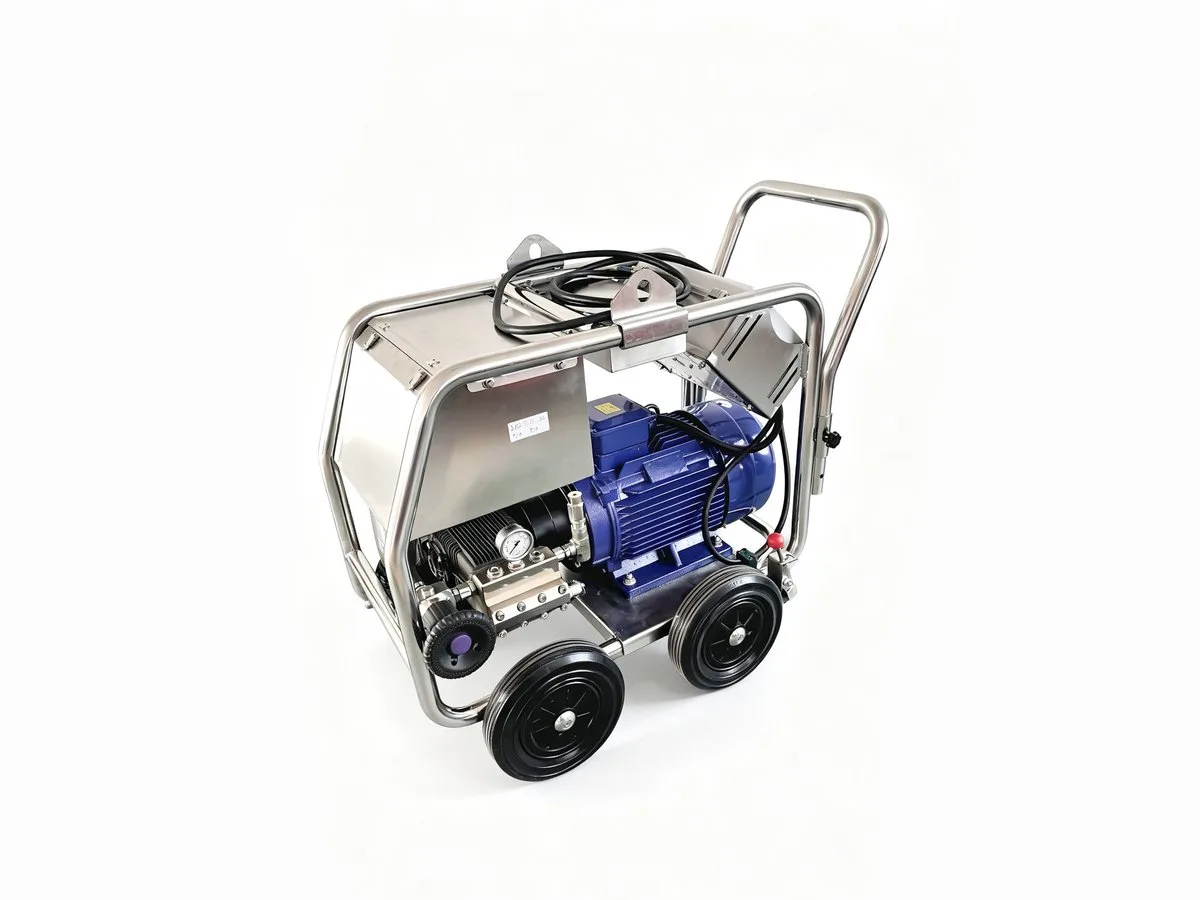
High Pressure Washer Pressure Level Selection Guide: 150 BAR to 1100 BAR
Why Pressure (BAR) is the Key Selection Criterion?
The cleaning power of a high pressure washer is determined by two core parameters: working pressure (BAR) and water flow (L/min). BAR directly dictates the impact force of the water jet—the higher the pressure, the stronger the ability to remove stubborn dirt, but also the higher the demands on operational safety and equipment durability.
Choosing the right pressure level not only significantly improves cleaning efficiency but also avoids energy waste and excessive equipment wear.
1. 150–200 BAR: Commercial Routine Cleaning
Applications:
- Vehicle washing (trucks, construction vehicles, ship decks)
- Daily rinsing of factory floors, warehouses, parking lots
- Exterior cleaning of food processing equipment and catering facilities
- Removal of light oil, dust, and mud
Features: This range is the entry level for commercial high pressure cleaning, balancing cleaning power and safety. For large areas with moderate soiling, 150–200 BAR combined with adequate water flow (usually 10–15 L/min) can achieve efficient cleaning.
2. 200–350 BAR: Industrial Heavy-Duty Cleaning
Applications:
- Pre-treatment of marine growth and paint on ship hulls and dock facilities
- Cleaning thick mud and grease from construction machinery and mining equipment
- Exterior cleaning of chemical reactors, storage tanks, and pipes
- Removal of concrete buildup from formwork and mixer trucks
- Industrial cleaning in explosive environments (e.g., petroleum, chemical, pharmaceutical, coal industries)
Features: This is the industrial grade. Equipment at around 350 BAR typically features durable ceramic plunger pumps, stainless steel valve assemblies, and industrial-grade frames, supporting continuous long-duration operation. For ship repair and heavy industry maintenance, this is the most cost-effective main range.
3. 500–700 BAR: Stubborn Dirt and Surface Preparation
Applications:
- Surface preparation before ship rust and paint removal
- Tube cleaning of large heat exchangers, condensers, and evaporators
- Removal of scale and carbon deposits inside industrial pipes
- Anti-corrosion pretreatment of steel structures, bridges, and oil tanks
Features: Water jets above 500 BAR have significant stripping ability, partially replacing traditional sandblasting and reducing dust pollution. Equipment in this range is usually driven by high-power electric motors or diesel engines and features reinforced high-pressure hoses and gun systems.
4. 850–1100 BAR: Ultra-High Pressure Professional Operations
Applications:
- Removal of paraffin and crude oil residues from drilling platforms and casings
- Special decontamination in nuclear facilities and petrochemical plants (e.g., radioactive dirt)
- Descaling of boiler and turbine blades
- Deep cleaning of desulfurization towers and coking furnace pipes in steel industry
- Cleaning of crude oil pipeline exteriors and low-density polyethylene silos
Features: 850–1100 BAR falls into the ultra-high pressure category. Such equipment typically uses industrial-grade three-plunger pumps, cast iron crankcases, and ceramic plungers, powered by high-power electric motors (37–132 kW) or diesel engines. Due to the extremely high impact force, strict safety protocols must be followed; nozzle selection and protective measures are critical.
Selection Advice: Not Just BAR
Choosing the right pressure level for your high pressure washer is crucial for efficient cleaning and equipment longevity. This guide covers from 150 BAR for commercial use to 1100 BAR for ultra-high pressure industrial applications, helping you make an informed decision.